


ASUS Launches the World's First WiFi 8 Gaming Router With the ROG Rapture GT-BN98

ASUS has spent years establishing itself as arguably THE biggest name in home networking, and with the launch of the ROG Rapture GT-BN98, the company is once again putting itself right at the forefront of the next generation of wireless technology. The GT-BN98 is being positioned as the world's first WiFi 8 gaming router, which is a pretty significant statement in itself. ASUS isn't waiting for WiFi 8 to become mainstream before jumping on board. Instead, it is getting in early and giving us one of the first real looks at where home networking could be heading next.
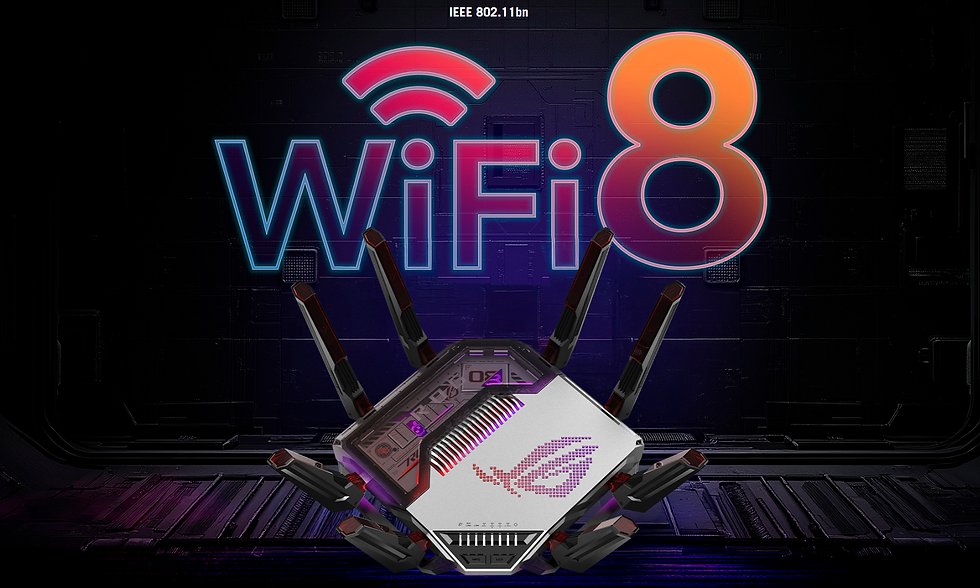
Of course, being first doesn't automatically mean something is better, and WiFi 8 is still very new territory. But ASUS has a long history in networking and has consistently been one of the brands pushing new technologies into the consumer market. From high-end ROG gaming routers through to its AiMesh ecosystem and more mainstream home networking products, ASUS has become one of the names people naturally think of when it comes time to upgrade their WiFi. Launching the industry's first WiFi 8 gaming router feels like a natural continuation of that.
The timing also makes a lot of sense. Our home networks are doing considerably more work than they were only a few years ago. It wasn't that long ago that most households had a couple of laptops and phones connected to WiFi, whereas now it is completely normal to have gaming PCs, consoles, multiple TVs, tablets, security cameras, smart speakers, robot vacuums, smart appliances and a growing collection of other devices all connected simultaneously. Add streaming, gaming, downloads and general internet use on top of that, and suddenly your router is doing far more work than you probably realise.
That is where the GT-BN98 becomes particularly interesting. It is a quad-band WiFi 8 router capable of delivering combined throughput of up to 25,000Mbps, which is obviously an enormous number, but the raw speed is honestly not the part that interests me the most. ASUS is placing a significant focus on improved reliability, stronger mid-to-long range performance and better handling of large numbers of connected devices. Those things might not sound as exciting as a huge speed number, but in the real world, they could potentially make a much bigger difference to how your network actually feels to use.
But What Difference Will You Actually Notice?
This is probably the question I think most people will have when looking at a router like the GT-BN98. If you're an average user with a reasonably good internet connection, are you going to plug this thing in and suddenly feel like you've entered another dimension of internet performance?
Probably not.
Facebook isn't suddenly going to load ten times faster, Netflix isn't going to magically look better and your phone isn't going to feel dramatically different when you're sitting three metres away from the router. If your current router already provides strong coverage and your network isn't particularly busy, the day-to-day difference could be fairly subtle.
Where I think something like the GT-BN98 could potentially make a much more noticeable difference is when your network is under pressure. Gaming is probably the most obvious example. A fast internet connection doesn't necessarily guarantee a great gaming experience, particularly when multiple people are doing different things across the same network. Someone downloading a huge game update, another person streaming a movie and a collection of devices quietly doing things in the background can all contribute to congestion.
The GT-BN98 includes Adaptive QoE, which is designed to dynamically manage bandwidth based on current network conditions and what different devices are actually doing. It also includes ASUS' gaming-focused optimisation features and GTNet technology, which analyses network conditions and is designed to find a more reliable path to game servers. Realistically, no router is going to magically fix a bad internet connection or eliminate problems with a game server on the other side of the world, but the potential benefit here is consistency. If the router can do a better job of managing everything happening across your home network and prioritising what matters, that could potentially mean fewer frustrating spikes in latency when the rest of the household starts hammering the internet.
I think IoT connectivity could actually end up being an even bigger part of the WiFi 8 conversation, though. We are connecting more devices to our home networks than ever before, and many of them are devices that we simply expect to work all the time. Security cameras, robot vacuums, smart lights, speakers, appliances and, in my case, robot mowers all rely on having a reliable connection. The problem is that these devices aren't always conveniently located close to your router.
This is something I've experienced personally. When I upgraded my own router recently, one of the biggest real-world improvements wasn't necessarily downloading something faster on my phone or PC. It was the fact that my robot mower was suddenly able to maintain a stable connection considerably further away from the house than before. That was one of those things that made me appreciate the importance of range and reliability because it was an improvement I could actually see and use.
ASUS is highlighting improved mid-to-long range performance and stronger IoT coverage as part of the WiFi 8 experience, and I think that could become increasingly important as our homes continue filling up with connected technology. The average household is only going to become more dependent on WiFi over the next few years, and having a network capable of handling dozens of devices without falling over every time everyone starts using something at once is arguably more valuable than simply having a bigger speed number on the box.
Of course, all of this is still something that needs to be properly tested. WiFi 8 is incredibly new, compatible devices are still emerging and real-world results are always going to vary depending on your internet connection, the size and construction of your home, the devices you're using and how congested your network actually is. On paper, the GT-BN98 sounds incredibly impressive, but specifications only tell part of the story. The real question is whether these improvements translate into something you can genuinely notice when using it every day.

And that is something we are genuinely excited to find out for ourselves.
The GT-BN98 is obviously being marketed as a gaming router, and the ROG branding makes that fairly clear, but it is also built for the increasingly complicated home networks we are all slowly creating. ASUS has included two 10G ports alongside four 2.5G Ethernet ports, giving users plenty of flexibility for high-speed wired connections. Whether that's a gaming PC, console, NAS or other bandwidth-heavy device, there is certainly no shortage of connectivity here.
It also supports AiMesh, which is one of the features I particularly like about the ASUS networking ecosystem. Not every house can be covered perfectly by a single router, especially if you have multiple levels, thick walls, outdoor entertaining areas or awkward sections where WiFi seems to simply disappear. AiMesh allows compatible ASUS devices to work together to expand coverage, giving users the option of building a larger network rather than simply replacing everything when one router isn't enough.
The GT-BN98 also includes Guest Network Pro, allowing users to create multiple separate networks for different types of devices. That could be particularly useful as IoT becomes increasingly common, giving users the ability to separate smart home devices from their primary network while also providing options for guest access, parental controls and VPN connections. There is also upgraded AiProtection security, WiFi Insight for monitoring network conditions and a comprehensive range of VPN features for those who want to dig deeper into what the router is capable of.
The reality is that most people probably won't use every feature available here, and that's perfectly fine. But I think that is part of the appeal of a premium router like this. You might not need all of these features today, but as your home network grows and your requirements change, they are there if and when you need them.
For me, the ROG Rapture GT-BN98 is interesting because it feels like a glimpse at where home networking is heading. We are connecting more devices, expecting stronger coverage and becoming increasingly reliant on WiFi for things that simply weren't connected to the internet a few years ago. Gaming is obviously a huge part of that, but smart home technology and IoT devices could become just as important when it comes to determining how good our home networks need to be.

ASUS has built a strong reputation in networking, and being the first to bring a WiFi 8 gaming router to market is a significant statement of intent. The GT-BN98 is clearly aimed at enthusiasts and people who want the latest technology rather than someone simply looking for the cheapest possible way to connect to the internet, but that doesn't make the technology any less interesting.
The specifications are impressive, the feature list is enormous and the potential benefits of WiFi 8 certainly sound promising. But for me, the most important thing will be finding out whether those benefits actually make a meaningful difference outside of a controlled testing environment.
Does the WiFi reach further? Does it remain more stable when dozens of devices are connected? Can it help keep gaming performance consistent when the rest of the household is streaming, downloading and generally hammering the network?
Those are the things that will ultimately matter.
On paper, the ROG Rapture GT-BN98 looks like an incredibly capable piece of networking hardware and a fascinating first look at the WiFi 8 era. ASUS has once again put itself at the front of the conversation, and now the exciting part will be seeing whether the world's first WiFi 8 gaming router can translate all of that impressive technology into improvements that everyday users can actually feel.
We are certainly excited to get our hands on one and find out for ourselves.
For more information on the ROG Rapture GT-BN98, visit the official ASUS ROG product page.


